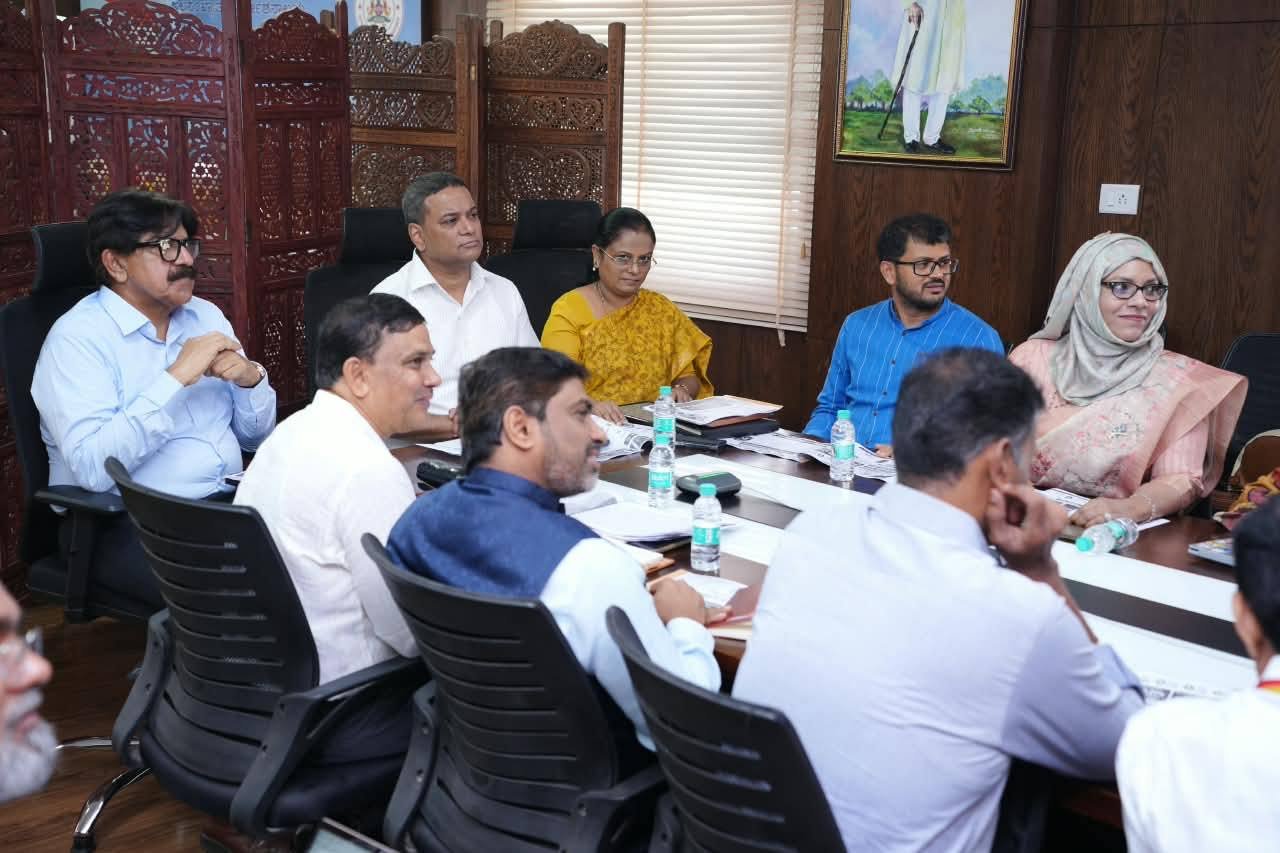
Taking the discussion forward
- The purpose: This preliminary meeting on 30 September 2026 allowed us to become acquainted and exchange broad views. I have organised the meeting notes into thematic categories to support our next discussion.
- Preparation so far: My office has examined relevant official records and prepared a draft parliamentary question for your consideration. It has not been submitted.
- My contribution: Education is close to me as an educationist. As Chairman, I would like to build on your expertise and help carry this work forward. With the privilege of serving as a Rajya Sabha Member from Karnataka, I would also like to take appropriate issues, including matters beyond the Group’s remit, to Parliament and the responsible Union ministers, seeking answers and attention at the highest levels.
- Your guidance: I welcome corrections, existing studies and suggestions that can sharpen the work and shape these interventions.
For the Group and community’s views and responses. These are working observations, not conclusions adopted by the Vision Group. The parliamentary question below is a draft and has not been submitted. Parliamentary follow-up seeks answers and attention; policy and implementation decisions remain with the competent authorities.
The education pathway discussed
The first discussion brought together questions that are often examined separately: children outside school, what examination results reveal about learning, changes in the language of instruction, and continuation after SSLC. Read together, they point to a larger question: how well do we understand a student’s progress across these stages?
The discussion concerned minority students across Karnataka, including those studying with different providers and children outside school. The themes below organise that pathway; they are not a ranking of priorities adopted by the Group.
Counting institutions does not tell us about every child
An institution’s enrolment or pass rate describes the students within its records. It cannot, on its own, describe children who never entered school or those studying elsewhere. The discussion extended across government, aided, private, community and welfare institutions. That makes the coverage of each dataset as important as the number it reports.
Our reading: never enrolled and dropped out must remain separate categories. Otherwise, we risk asking a question about retention when the issue may be access in the first place.
Physical and digital access also matter. The provider landscape discussed included Urdu schools, madrasas, charitable institutions and Waqf-linked colleges, alongside other schools and colleges. A statewide student picture cannot be inferred from the records of one department alone.
A pass result leaves a second question
Questions in the meeting went beyond the pass percentage to marks, examination attempts and subsequent progression. The distinction is important: completing an examination and being prepared for the next stage are related, but different, things.
The discussion of moving from Urdu- or Kannada-medium primary schooling into English-medium Class 6 makes this concrete. Difficulty with a subject and difficulty understanding its language may overlap. Looking at the result alone would not distinguish them. Existing assessments and teacher observations could help us understand the difference; the meeting does not establish its scale.
The meeting also raised foundational learning, teacher support and accountability, school and hostel conditions, and the space and support students have at home. Community learning support and institutional partnerships were discussed as options, not selected programmes. Understanding the needs behind these proposals would help us judge which support is useful.
Provision and progression are different measures
The discussion about girls continuing after SSLC and the availability of PUC raised another distinction. An announced institution, an operating course and a student actually joining it are different facts.
Institution counts help describe provision. To understand progression, we would need evidence about what happens to students after SSLC. A difference between two annual enrolment totals would not, by itself, establish how many individual students discontinued. Reasons for discontinuation would need their own evidence.
Further study, preparation and employment
The discussion extended to higher education, earlier preparation for competitive examinations, coaching, skilling and employment. Reading, language confidence and subject understanding developed at school affect how prepared a student is for later opportunities.
For any proposed intervention, we should be able to explain the outcome sought and the evidence that would show whether it helped. Course places, expenditure and training delivered are not, by themselves, evidence of a student progressing to further study or work. Existing studies and programme records could help clarify that progression.
Work prepared following the preliminary meeting
- Meeting material: the recoverable discussion has been organised into themes, with gaps and numerical claims requiring verification kept separate.
- Official records: my office has reviewed the PRABANDH out-of-school children manual and a relevant earlier parliamentary answer.
- A concrete draft: the parliamentary question below has been prepared for members’ comments. It has not been submitted.
Clarifications still needed
The departmental presentation and the definitions behind its figures still need to be obtained. Existing Karnataka studies and clearer information about coverage, attendance and progression would help test this reading. Numbers mentioned orally are not reproduced here as verified findings.
Further work proposed
I would like to help organise the material members share and prepare focused analysis of questions they want examined. Where a useful question concerns information held by the Union, I can consider the appropriate parliamentary route and bring back any answers obtained, including their limits and remaining gaps.
These are proposed contributions from my office, not work allocations adopted by the Group. Any agreed priorities and responsibilities should emerge from the Group’s discussion and the decisions of the competent authorities.
Where Parliament could add something
The clearest parliamentary connection we have identified concerns children outside school. The Ministry of Education’s published PRABANDH manual records never-enrolled and dropout categories, religion, gender, survey date and subsequent school enrolment. The existence of these fields does not guarantee complete returns.
In its answer to Lok Sabha Question 2522 on 3 August 2026, the Ministry used State-uploaded PRABANDH information to report identified out-of-school children in Rajasthan, including Tonk and Sawai Madhopur. This is a basis for asking what the same reporting system can show for Karnataka.
How many children were recorded as never enrolled or having dropped out, and how many were subsequently enrolled in school?
Read the proposed question to the Minister of Education
Will the Minister of Education state, for the last three completed academic years for which verified returns are available, the State/UT-wise and Karnataka district-wise number of out-of-school children recorded on the Samagra Shiksha PRABANDH portal, separately for those never enrolled and those who dropped out, by religion and gender where recorded; the number in each category subsequently enrolled in a school with a UDISE code; and the survey year and verification status of these returns?
An answer could clarify the available record and its gaps. It would not count every unidentified child, prove continued attendance or answer the separate learning and PUC questions above. I would consider this in my own parliamentary capacity, after reviewing responses and checking prior answers and filing requirements. It is not a Group recommendation.
What would change this reading?
Is there evidence that changes any of these distinctions? An existing Karnataka study we should examine? A more useful way to frame the parliamentary question? Please send comments or relevant studies in the group where this link was shared.
Developments since this meeting
The Group met again on 17 October 2026. The first meeting’s questions developed into a defined remit and a programme of evidence gathering: data sources, qualitative consultation, learning assessment and scheme evaluation. The updated notes include the working plan’s methods and proposed initiatives.
The supplied second-meeting minutes record approval of five terms of reference. The updated Meeting 2 notes also cover the seven proposed initiatives, the working plan’s study methods and scheme inventory.
The minutes record smaller working groups, requests for further education data, public consultations and meetings in other districts. Group membership and implementation dates remain to be confirmed.
The project home brings together the meeting log, dated updates, recorded decisions and follow-up work, so members can follow progress between meetings.