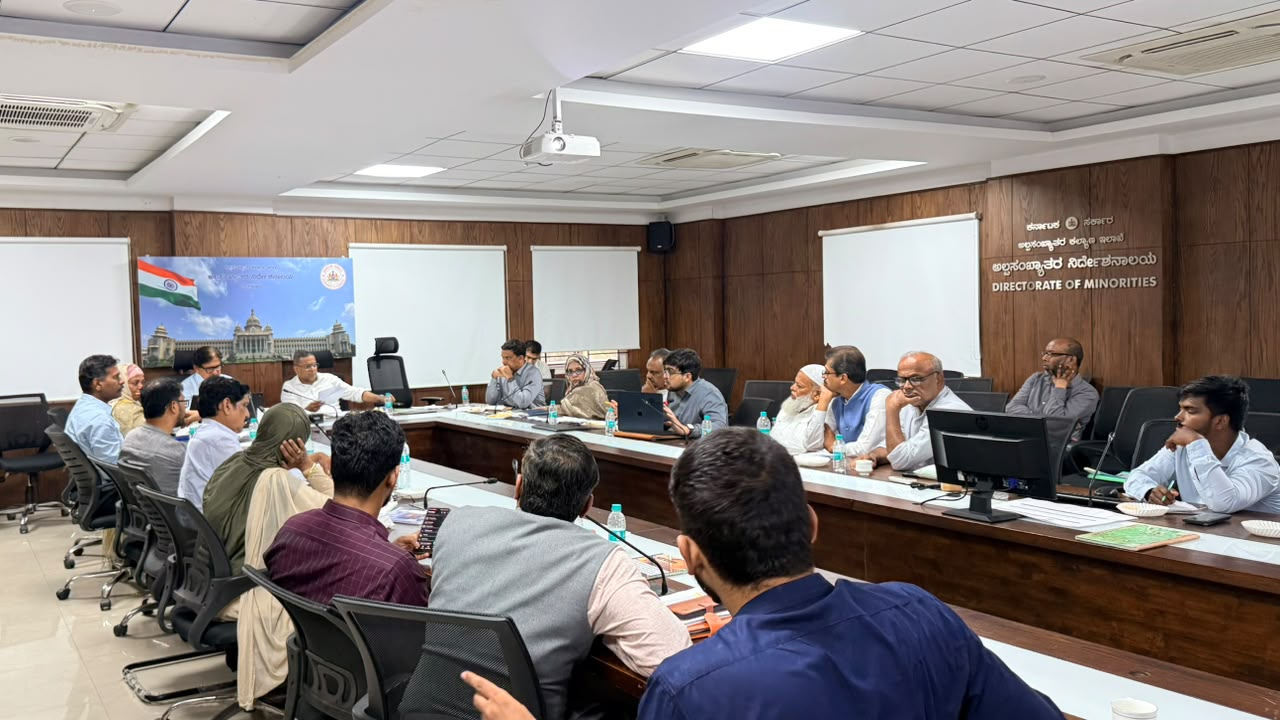
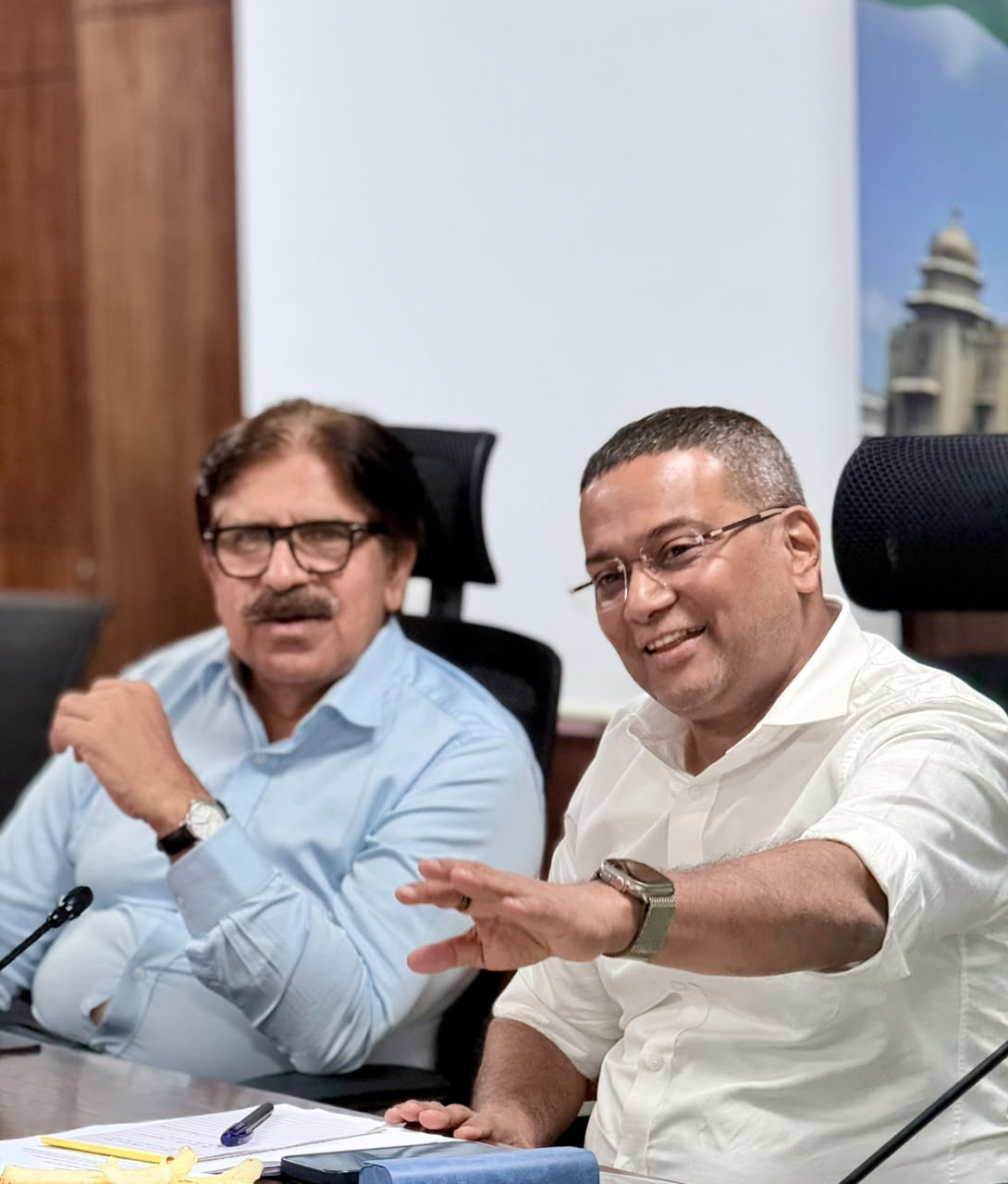
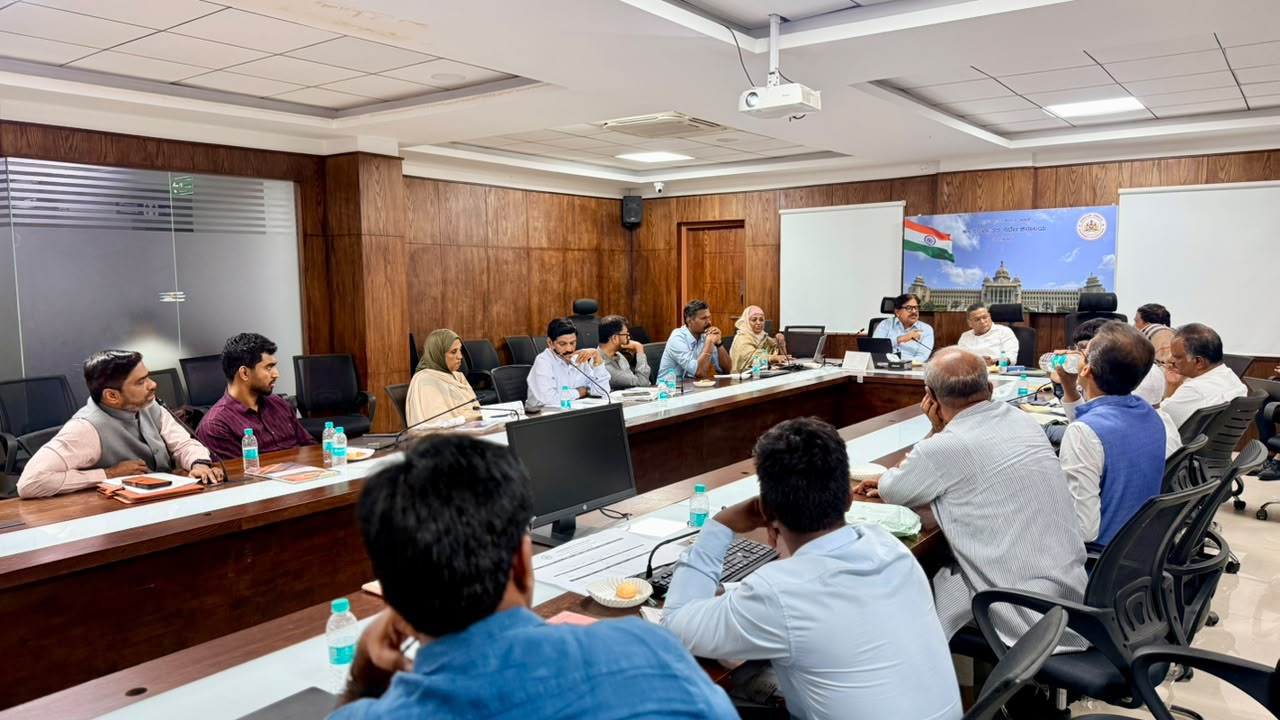
Taking the first discussion forward
Building on our first meeting on 30 September, the discussion concentrated on:
- Define the remit. Clarify what the Group should examine, the recommendations it should prepare and how the work should be organised.
- Establish the baseline. Bring together existing records and identify questions that require further investigation.
- Examine educational provision. Review institutions, teaching, scholarships, coaching and other support.
- Work between meetings. Form smaller groups, undertake visits and return with specific observations and proposals.
The presentations contained several possible programmes and methods. These remain proposals for examination; this account does not treat them as adopted schemes.
Participants recorded in the minutes
- Shri. Mansoor Ali Khan, Chairman
- Shri. L.K. Atheeq
- Director, Minority Welfare Department, Member Secretary
- Deputy Director, Minority Welfare Department
- Shri. Umar Teekay
- Dr. Abdul Qadeer
- Dr. (Fr) Fransis
- Smt. Bella Shetty
- Smt. Rukhsana Nazneen
- Shri. Rudresh, Azim Premji Foundation
- Dr. Shaukath Azim
- Shri. Srinivasan Thimmarayan
- Shri. Abdul Subhan
- Smt. Aysha Farzana U.T.
- Dr. Ruksana Hassan
- Shri. Rafi Bhandari
A proposed framework for the work
Mr. Amaan’s presentation organised the proposed work around three connected components.
Establish the evidence
Combine administrative records with students’ experiences. Examine the present position across communities, districts and genders.
Evaluate existing provision
Examine whom institutions and schemes reach, how resources are used and whether intended educational outcomes are achieved.
Prepare recommendations
Identify measures for the short, medium and long term, with responsible departments, costs and monitorable targets. The working plan also proposes implementation monitoring and a standing data system.
The working plan connects evidence gathering with an evaluation of existing provision and a report to Government. It proposes an inception note with the survey plan, an interim baseline and scheme-evaluation report, and a final report with phased recommendations and implementation arrangements.
The suggested report would cover the mandate, demographic profile, baseline indicators, comparisons with other states, schemes, infrastructure, public hearings and findings. Annexures would retain the survey methods and instruments, tables and meeting records. The plan leaves report deadlines, receiving authority and records office to be filled in.
Terms of reference recorded as approved
The supplied minutes record the following five terms as finalised by Shri. L.K. Atheeq and approved by the Group:
- Examine the status of education among minorities, covering access, enrolment, retention, dropout rates and learning levels.
- Examine the condition of Minority Welfare Department schools and Government Urdu schools, identify problems and suggest remedies and reforms.
- Evaluate all government schemes taken up for the education of minorities.
- Examine minority participation in higher education, identify causes of low enrolment and suggest measures.
- Examine regional imbalances in education among minorities.
Shri. Umar Teekay stressed that private institutions must also be studied. Whether this coverage is explicit in the terms remains a clarification in the minutes.
Building the baseline
Members discussed the need to assemble evidence across the student’s education:
- School participation. Enrolment, regular attendance, children never enrolled and children who have discontinued.
- Learning and examinations. Subject understanding, marks and readiness for the next stage.
- Progression after SSLC. PUC, ITIs, diplomas, other training and subsequent higher education.
- Higher education. Undergraduate, postgraduate and professional-course participation.
- Support received. Scholarship awareness, applications, access and institutional support.
- Later outcomes. Employment, the kind of work obtained, skills and entrepreneurship.
Sources identified for examination
- SATS
- Student records
- SSP
- Scholarship records
- HRMS
- Teacher information
- Other datasets
- Higher education and learning assessments
Their coverage, years available and community breakdowns need to be checked.
Members stressed the importance of recent evidence, including the period after COVID, rather than relying entirely on older studies.
Understanding students’ experiences
The minutes record a proposed qualitative survey of 6,000 to 10,000 respondents to examine dropout, employability, access and the experiences behind the administrative figures.
- Discontinuation. Why do students discontinue at particular stages?
- Financial pressures. How do household finances and employment opportunities affect educational choices?
- Continuation. What helps students remain in education?
- Preparation. Are students learning sufficiently to benefit from further study?
- Access to support. How do families experience scholarships and other support?
The sample, questionnaire, coverage and method would need to be designed before commissioning.
The study design proposed in the working plan
- Collect existing evidence. Analyse published reports and departmental records, with formal requisitions to state and central departments, boards, universities and institutions.
- Combine survey methods. The working plan proposes a quantitative sample survey and a separate qualitative study by an independent external evaluator. Include students, parents, teachers, school and hostel heads, madrasa and minority-institution managers, and scheme beneficiaries and non-beneficiaries.
- Compare district experience. Visit districts with substantial minority populations and compare places performing better and worse on baseline indicators. The qualitative study would include visited districts; the plan separately proposes a sample survey across all districts under independent technical supervision.
- Hear representations. Use public hearings, a published call for suggestions and a secretariat portal through which departments, institutions, community organisations, educators, parents and students can contribute evidence.
- Use expert review. Commission background papers where useful and have an advisory panel review the methods and findings. Compare minority communities with other groups and with the same communities in other states.
The baseline work would bring together participation, learning outcomes and attendance, with comparisons across communities and regions. Surveys would address questions the available records cannot answer.
Lessons proposed from earlier inquiries
- The working plan draws on Telangana’s Sudhir Commission for combining data analysis, district visits, hearings, commissioned papers, a sample survey and advisory review. It recommends allowing enough time for data assembly and fieldwork.
- It draws on Kerala’s Paloli Committee for district hearings, grouping representations into priorities, identifying gaps against provision norms and giving recommendations an administrative home. It proposes adding primary survey evidence to this approach.
Measuring learning and institutional quality
The discussion distinguished foundational literacy and numeracy from the further subject preparation needed through elementary school and into secondary education.
- Assess learning directly. Develop a proposal with Azim Premji Foundation involvement, including comparisons with suitable schools.
- Examine language and subject understanding. Identify where difficulty arises from the language of instruction, the subject itself or both.
- Look beyond pass percentages. Examine marks, subject performance and readiness for PUC or professional study.
- Maintain student learning profiles. Use evidence about individual students to identify the support they require.
- Set institutional standards. Consider class size, staffing, teacher preparation, laboratories, computer facilities and the learning environment.
- Prioritise support. A grading approach, including an A/B/C model, was suggested to help identify institutions requiring the most attention.
The assessment’s coverage, comparison method, costs and reporting arrangements remain to be settled.
Teacher availability, preparation and classroom support
Members identified English, mathematics and science as subjects requiring particular attention.
- Staffing. Examine vacancies, subject qualifications, deployment and the balance between permanent and temporary teachers.
- Training. Provide continuing subject and teaching support, with arrangements that survive transfers or staff changes.
- Academic supervision. Examine how welfare-department schools receive curriculum guidance, classroom support and educational oversight.
- Language provision. Distinguish teaching English as a language from adopting English as the medium of instruction. English-medium schooling with Urdu retained as a first language was one suggestion raised.
- Partnerships. Draw on the experience of foundations, universities and educational institutions, including examples of teacher training and training trainers.
Two approaches to additional classroom support
- A fellowship model
- Recruit capable graduates through a selection process for a proposed two-year placement, with training and defined responsibilities.
- An integrated teaching framework
- Provide teachers with lesson plans, classroom guidance and regular checks on students’ understanding.
The fellowship proposal included an example of planning delivery across 180 teaching days. Members also questioned whether a new fellowship would create another dependency, favouring stronger support for everyday teaching. Both positions deserve examination.
Attendance and support for different learners
- Follow up absences. An institutional representative described pursuing individual cases until students returned to school.
- Monitor both forms of attendance. Examine teacher attendance alongside student attendance.
- Differentiate academic support. Provide suitable help for students struggling with subjects, students needing further practice and high-performing students preparing for competitive examinations.
- Assess chapter and subject understanding. Use regular checks to guide remedial teaching and mentoring.
- Involve parents. Understand barriers to attendance and continuation, rather than relying only on enrolment records.
The discussion also included examination-preparation tools. Their usefulness should be considered alongside sustained subject learning.
Reviewing institutions, schemes and resources
Members proposed examining schools, residential institutions, Maulana Azad schools, hostels, scholarships, coaching and other educational support.
- Coverage. Who receives support, and which districts or groups remain less well served?
- Use of funds. How do allocations and expenditure relate to participation and educational outcomes?
- Effectiveness. Assess relevance, reach, fund utilisation, timeliness, outcomes and sustainability. Recommend whether each scheme should continue, be redesigned, merged or discontinued.
- Unaided institutions. What academic, infrastructure or partnership support could help institutions serving minority students?
- Institution mapping. Distinguish minority-managed institutions from the wider set of institutions attended by minority students.
Programmes listed for review in the working plan
The plan’s inventory defines the proposed review coverage. Current provision, beneficiaries and programme records would need to be checked for each item.
- Schools and hostels. Morarji Desai residential schools; Maulana Azad Model, English-medium and Public Schools covering LKG to PU as listed in the plan; upgraded Urdu schools; post-matric hostels; and residential science and commerce colleges.
- Scholarships and incentives. Pre-matric, post-matric and other DBT scholarships; Maulana Azad Pratibha Puraskar; BSc Nursing and GNM fee support; and overseas scholarships.
- Coaching and employability. NEET, JEE and CET preparation; residential KAS and civil-services coaching; police and Group C coaching; and VTU skills training.
- Higher and distance education. The KSOU regional centre listed in the working plan.
- Madrasa modernisation. Computers, smart boards and NIOS access for the SSLC examination.
- Infrastructure. School, hostel, college and Maulana Azad school buildings, alongside staffing and provision in areas with substantial minority populations.
Dr. (Fr) Fransis recommended studying best practices in other minority communities and their institutions. He emphasised enrolment, attendance, employability and progression between grades as areas of focus.
Resource planning also featured in the discussion. One suggestion was to examine larger school models supported by transport, alongside the deployment of teachers across smaller schools. School-building designs were raised as another area for review, subject to the stage of construction and procurement.
Education, employment and community learning
Smt. Rukhsana Nazneen presented seven proposed initiatives:
- Minority Education Excellence Mission
- Student Scholarship and Opportunity Network
- AI Shiksha and Teacher Digital Excellence
- Youth Career and Employment Pathways
- Women’s Digital Leadership Initiative
- Masjid and Community Learning Network
- Education and Employment Baseline
The presentations proposed connecting education more closely with practical skills and future opportunities:
- Earlier exposure to skills. Examples included coding during school and practical accounting, GST and TDS work for commerce students.
- Recognised certification. Provide routes through which practical skills and trades can receive formal recognition.
- Women’s opportunities. Consider continuing education, professional guidance, digital leadership and skills that support economic independence.
- Digital and AI literacy. Prepare teachers as well as students; examine how AI, robotics and other tools could be used feasibly in education.
- Community learning spaces. Explore supplementary learning in suitable existing facilities, including mosque-linked spaces.
- Partnership networks. Connect schools, colleges, families, employers, community organisations and NGOs.
The first presentation emphasised strengthening existing institutions and facilities. It also proposed coordinated work on academic quality, scholarship access, teacher digital capability, careers, women’s opportunities, community learning and education-to-employment information.
Follow-up before the next meeting
The minutes record approval of the five terms of reference and the following decisions and follow-up work. This list records what was agreed or requested; completion will be added as work progresses.
- Working groups
- The minutes record that sub-groups will follow the five terms of reference. Members should indicate their interests; the Chairman will assign membership. The final groups and conveners are not listed.
- Education data
- Obtain education records covering further years, clarify institutional coverage and account for alternative education routes.
- Learning assessment
- Develop a proposal for learning assessment, including its coverage, comparison method, costs and reporting.
- Public consultation
- The minutes record a decision to set up a public portal and hold consultations. Confirm the departmental personnel and coordination needed to sustain this work. The portal’s launch, support arrangements and consultation dates are not yet recorded.
- District meetings
- Hold some Vision Group meetings outside Bengaluru, in other districts, as recorded in the minutes.
- Next meeting
- The minutes envisage the next meeting within two weeks of 17 October, with hybrid participation. The exact date, venue and joining details are not recorded.
My contribution and your guidance
As Chairman, I would like us to return with progress on these items. As a Rajya Sabha Member from Karnataka, I can also pursue appropriate questions concerning information held by the Union government and bring those answers into our consideration.
I welcome corrections, relevant studies and suggestions from the wider public. As we move into consultations across the state, we look forward to interacting and engaging with all stakeholders, including students, teachers and parents.
Mansoor Ali KhanRajya Sabha Member from KarnatakaChairman, Karnataka Minority Education Vision Group